WHY GOING IT ALONE CAN FEEL HARDER
Many women enter perimenopause or menopause with years of experience managing their own health and fitness.
They may already know the basics.
Eat well. Exercise regularly. Get enough sleep. Manage stress.
The challenge is that knowing those things does not always make them easy to apply.
Hormonal changes can affect how you feel from one week to the next. Sleep may become less predictable. Energy can fluctuate. Hunger or cravings may feel different. Workouts that once felt manageable can suddenly leave you feeling more depleted.
This can create a cycle of frustration.
A woman may notice weight gain and respond by eating less. When progress feels slow, she may add more cardio. Poor sleep then makes the extra exercise harder to recover from, which can lead to even lower energy and motivation.
Without guidance, it can be difficult to know whether the answer is to push harder or adjust the plan.
That uncertainty is where coaching can become valuable.
A menopause coach can help you look at the bigger picture instead of focusing on one number.
That may include:
- Strength
- Sleep
- Nutrition
- Movement
- Recovery
- Stress
- Energy
- Consistency
- Progress
Having someone help evaluate these areas can make it easier to identify what actually needs attention.
For example, if weight loss has stalled, the solution may not be cutting more food. It may be improving meal structure, increasing protein, building more daily movement, or becoming more consistent with strength training.
If workouts feel exhausting, the answer may not be giving up on exercise. It may be adjusting volume, intensity, frequency, or recovery.
Coaching can remove some of the guesswork.
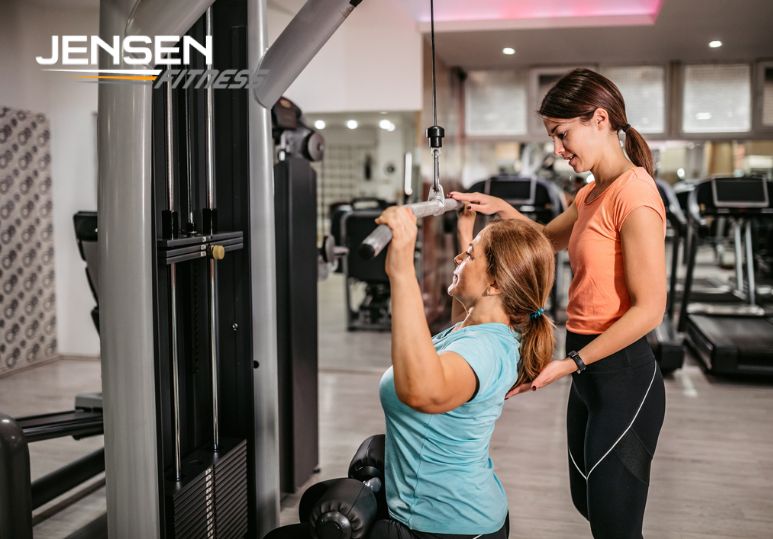
It also creates accountability.
When you are managing everything alone, it is easy to let one difficult week turn into several weeks away from your routine. A coach can help you adapt instead of abandoning the plan completely.
That does not mean someone is watching every decision you make.
It means you have support when things become difficult.
HOW MENOPAUSE COACHING CREATES STRUCTURE
One of the biggest benefits of menopause coaching is having a clear plan.
The internet provides endless advice about menopause.
Some sources recommend fasting. Others recommend eating more frequently. Some say cardio is essential. Others insist women should avoid it. Some encourage very low-calorie diets, while others promote complicated supplement routines.
Trying to follow all of that information at once can create more confusion than clarity.
A personalized coaching plan simplifies the process.
Instead of trying to do everything, you can focus on the habits most relevant to your goals.
Strength training is often an important part of that approach.
Maintaining muscle becomes increasingly important with age. Strength training can support physical function, body composition, confidence, and long-term independence.
A well-designed program can be adjusted to your current level rather than forcing you into workouts that are too intense.
Nutrition can also become more structured.
Rather than constantly switching between diets, coaching can help you create balanced meals built around protein, vegetables, fibre-rich carbohydrates, and healthy fats.
Protein is especially valuable for supporting muscle recovery and helping meals feel more satisfying.
A coach can also help you identify where nutrition habits may be inconsistent.
Maybe breakfast is regularly skipped.
Maybe protein intake is low.
Maybe weekends look completely different from weekdays.
Maybe stress is leading to evening snacking.
These patterns are often easier to recognize when someone helps you step back and look at the whole routine.
Daily movement matters too.
Women sometimes think progress depends entirely on formal workouts.
It does not.
Walking, taking stairs, moving during the workday, completing errands on foot, and staying generally active can all contribute to overall activity.
A realistic plan may focus on:
- Strength training
- Walking
- Protein
- Hydration
- Sleep
- Recovery
- Meal planning
- Stress management
The goal is not to create more rules.
It is to create enough structure that you know what to focus on.
BUILDING CONFIDENCE THROUGH SUPPORT
Menopause can affect confidence in ways women do not always expect.
Your body may feel different.
Your usual clothes may fit differently.
Workouts may feel harder.
Progress may move more slowly.
Those changes can make it tempting to believe that fitness is no longer working.
That is rarely the full story.
Your strategy may simply need to change.
Coaching can help shift the focus from punishment to progress.
Instead of asking, “How much weight did I lose this week?” you can also look at questions such as:
- Are you stronger?
- Are you moving more?
- Are you recovering better?
- Are meals becoming more consistent?
- Are you sleeping more regularly?
- Do you feel more confident in the gym?
- Can you complete activities that once felt difficult?
These are all meaningful forms of progress.
A coach can also help prevent all-or-nothing thinking.
You do not need every week to be perfect.
Some weeks will include strong workouts and great sleep.
Others may involve hot flashes, stress, family responsibilities, poor sleep, or lower energy.
A sustainable plan needs room for both.
That might mean adjusting a workout rather than skipping it.
It might mean choosing a balanced convenience meal instead of assuming healthy eating is impossible because you did not cook.
It might mean taking an extra recovery day without feeling guilty.
Menopause coaching helps women develop those decision-making skills over time.
At Jensen Fitness, the goal is to help women become more confident in managing their own routines, not more dependent on complicated rules.
That means learning what works for your body, understanding how to adjust when symptoms change, and knowing which habits deserve the most attention.
It is also important to understand what coaching cannot do.
Menopause coaching is not a replacement for medical care.
Symptoms such as severe hot flashes, significant mood changes, unusual bleeding, persistent pain, or other concerning changes should be discussed with an appropriate healthcare provider.
Coaching focuses on lifestyle.
It can support exercise, nutrition, recovery, daily movement, stress management, and accountability while medical professionals address health concerns that require diagnosis or treatment.
The two can work alongside each other.
For many women, that combination makes menopause feel less overwhelming.
Instead of searching for a perfect solution, they have a practical plan for the parts of their health they can influence every day.
At Jensen Fitness, we help women build sustainable fitness and nutrition routines that support strength, energy, confidence, and weight-management goals throughout menopause.
You do not need to navigate every change alone.
With the right structure and support, this stage can become an opportunity to build habits that are stronger, more realistic, and better suited to the life you are living now.