PRIORITIZE PROTEIN AND FIBRE
Protein becomes increasingly important as women move through perimenopause and later into menopause.
As we age, maintaining muscle can become more difficult. Hormonal changes, lower activity levels, and inadequate protein intake can all contribute to gradual muscle loss over time. That matters because muscle supports strength, mobility, metabolism, balance, and everyday independence.
Including protein throughout the day can support muscle repair and recovery, especially when combined with regular strength training.
Good protein sources include:
- Eggs
- Chicken
- Turkey
- Fish
- Greek yogurt
- Cottage cheese
- Lean beef
- Tofu
- Tempeh
- Lentils
- Beans
- Edamame
Rather than saving most of your protein for dinner, try spreading it across your meals.
For example, breakfast might include eggs and Greek yogurt, lunch could include chicken or lentils, and dinner might include salmon, tofu, or lean beef.
This approach can make it easier to meet your daily protein needs and may also help meals feel more satisfying.
Fibre is another important part of perimenopause nutrition.
Fibre supports digestion, helps meals feel more filling, and can contribute to healthy cholesterol and blood sugar management.
Fibre-rich foods include:
- Oats
- Berries
- Apples
- Pears
- Beans
- Lentils
- Chickpeas
- Broccoli
- Leafy green
- Whole grains
- Chia seeds
- Flaxseeds
Many women find that appetite and cravings become less predictable during perimenopause, particularly when sleep is poor or stress is high.
Meals that combine protein and fibre can be especially useful because they tend to feel more satisfying than meals built primarily around refined carbohydrates.
For example, instead of having toast alone, you might pair whole-grain toast with eggs and fruit.
Instead of eating a granola bar as a snack, you might choose Greek yogurt with berries and chia seeds.
You do not need to eliminate carbohydrates.
Carbohydrates provide energy, particularly for women who are active or strength training regularly. The focus should be on choosing carbohydrates that also provide fibre, vitamins, and minerals.
Good options include:
- Potatoes
- Sweet potatoes
- Brown rice
- Quinoa
- Oats
- Whole-grain breads
- Beans
- Fruit
Balanced meals are often more helpful than strict food rules.
CHOOSE HEALTHY FATS AND WHOLE FOODS
Dietary fat is also an important part of a balanced perimenopause diet.
Fat supports normal body functions and can help meals feel more satisfying. The key is choosing nutrient-dense sources rather than relying heavily on highly processed foods.
Healthy fat sources include:
- Avocado
- Olive oil
- Nuts
- Seeds
- Salmon
- Sardines
- Trout
- Natural nut butters
Fatty fish is particularly valuable because it provides omega-3 fatty acids as well as protein.
Foods such as salmon, trout, sardines, and mackerel can be incorporated into meals a few times each week depending on preference.
Nuts and seeds are also easy additions.
A small serving of walnuts, almonds, pumpkin seeds, chia seeds, or ground flaxseed can be added to yogurt, oatmeal, salads, or smoothies.
Fruits and vegetables should also be included regularly.
Different colours provide different vitamins, minerals, and plant compounds, so variety matters more than finding one “perfect” vegetable.
Useful options include:
- Spinach
- Kale
- Broccoli
- Peppers
- Tomatoes
- Carrots
- Berries
- Oranges
- Apples
- Kiwi
Calcium-rich foods also deserve attention during the menopausal transition because bone health becomes increasingly important as women age.
Calcium-containing foods include:
- Milk
- Greek yogurt
- Cottage cheese
- Fortified plant-based beverages
- Tofu made with calcium
- Certain leafy greens
Vitamin D also plays an important role in bone health.
Some foods contain vitamin D, including fatty fish, egg yolks, and fortified products, although individual needs vary.
A healthcare provider can help determine whether testing or supplementation is appropriate.
Another useful strategy is reducing the amount of highly processed food that makes up your everyday diet.
That does not mean you can never eat dessert, chips, takeout, or other convenience foods.
Perimenopause nutrition does not need to be perfect.
The goal is simply to make nutrient-dense foods the foundation of your routine more often than not.
Highly processed foods are often easier to overeat because they may contain combinations of added sugars, refined carbohydrates, salt, and fats while providing relatively little fibre or protein.
Creating meals from mostly whole or minimally processed ingredients can make appetite and portion management easier without requiring constant calorie counting.
Hydration matters too.
Hot flashes and night sweats may increase discomfort, particularly during warmer weather or exercise. Keeping water nearby throughout the day is a simple habit that can support overall well-being.
Some women also find that alcohol, caffeine, spicy foods, or very hot drinks seem to make hot flashes or sleep disruption worse.
These triggers are individual.
Rather than eliminating everything at once, pay attention to patterns.
If you regularly experience symptoms after a specific food or drink, you can experiment with reducing it and see whether you notice a difference.
BUILD A REALISTIC EATING ROUTINE
The best perimenopause diet is not the strictest one.
It is the one you can maintain.
Many women become frustrated with weight changes during perimenopause and respond by dramatically reducing calories or removing entire food groups.
This can create short-term results, but it often becomes difficult to sustain.
If you are also exercising regularly, eating too little can make it harder to recover, maintain strength, and feel energized.
Instead of aiming for perfection, build meals around a simple structure.
A balanced plate may include:
- A source of protein
- A fibre-rich carbohydrate
- Vegetables or fruit
- A source of healthy fat
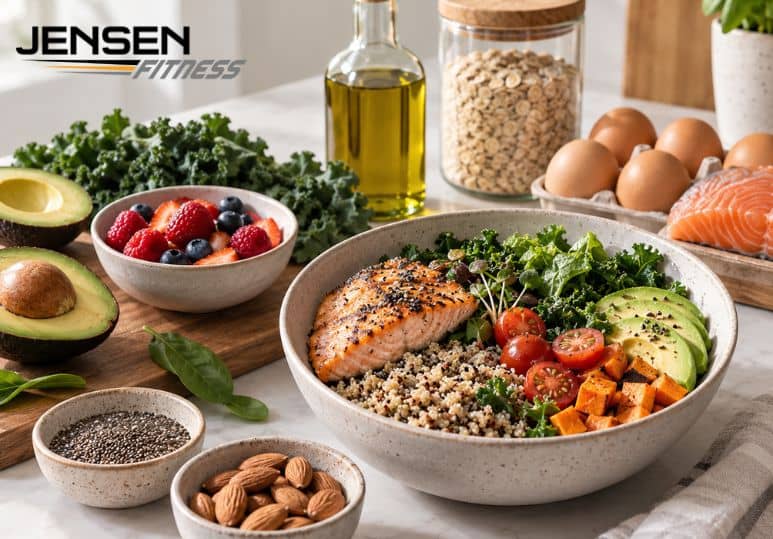
For example, dinner could be grilled salmon with roasted potatoes, broccoli, and olive oil.
Lunch might be chicken with quinoa, vegetables, and avocado.
Breakfast could include Greek yogurt, berries, oats, and chia seeds.
These meals are not complicated.
That is the point.
Nutrition becomes easier to maintain when you do not need to reinvent your diet every week.
Planning ahead can also help.
Keeping a few easy protein sources available can make healthier meals more convenient when work, family responsibilities, or low energy make cooking difficult.
Helpful staples may include:
- Pre-cooked chicken
- Eggs
- Greek yogurt
- Canned tuna
- Frozen fish
- Beans
- Frozen vegetables
- Pre-washed salad greens
- Fruit
- Whole-grain wraps
You do not need to cook every meal from scratch to eat well.
Consistency is more important than complexity.
It can also help to stop thinking about food as either “good” or “bad.”
A healthy eating pattern can include enjoyable foods.
The key is frequency, portion size, and the overall pattern of your diet.
This can make nutrition much easier psychologically, especially for women who have spent years cycling between restrictive diets and periods of overeating.
At Jensen Fitness, we help women create realistic nutrition strategies that fit their lifestyles, preferences, and fitness goals.
That may involve increasing protein, improving meal structure, reducing mindless snacking, planning ahead, or simply learning how to build balanced meals more consistently.
The goal is not to promise that certain foods will magically balance hormones.
Nutrition cannot stop the normal hormonal changes of perimenopause.
What it can do is support the body while those changes are happening.
A balanced diet can help provide the energy and nutrients needed for strength training, daily movement, recovery, and long-term health.
Perimenopause may change how your body feels and responds, but it does not mean you need a complicated or restrictive diet.
Start with the fundamentals.
Eat enough protein.
Choose fibre-rich foods.
Include healthy fats.
Eat plenty of fruits and vegetables.
Stay hydrated.
Strength train consistently.
And build a routine you can realistically maintain.
At Jensen Fitness, we help women take the confusion out of perimenopause nutrition and create habits that support strength, confidence, energy, and sustainable weight management throughout this stage of life.